TIBBIR Universe · Saved post receipt · 2108448857918943276
Altcoinist
@Altcoinist · Published: Fri Oct 09 06:45:55 +0000 2026
Original post on X · Full data receipt · Backup index
Saved archive render, not a screenshot of the original X page. Full captured content is retained below; capture gaps are stated explicitly. Video files are not stored.
Gribbit 🐸
The community found $TIBBIR on http://butler.virtuals.io 👀
It’s named in one of the four demo chats on the homepage, and it’s the only token the bot is shown buying on a schedule.
Where it is: in the site’s script file (app.js), in the demo for feature 02, “Trades with your limit, never past it”:
User asks: “Buy $200 of TIBBIR every 10 min and stop when @visa tweets”
Butler replies: “One thing first, how much may I spend in total?”
Approval card: “Buy $200 of TIBBIR every 10 min, stop when visa tweets? · $2,000 to work with · stops at the tweet or when it’s spent”, with a “Hold to start” slider.
After the hold: “Started · Buys $200 of TIBBIR every 10 min until visa tweets”
The buy stops when Visa tweets, which is a payments link rather than an ordinary trading signal.
The other three demos are about the Anthropic IPO filing, a SPX6900 long that closes when Murad tweets, and a dashboard of wallets that bought CRIME early (“snipers”). Butler is a new chat app from Virtuals (“Virtuals – AI, Money, Social”, iOS only so far, invite-only beta).
The page was last updated on 05/10/2026.
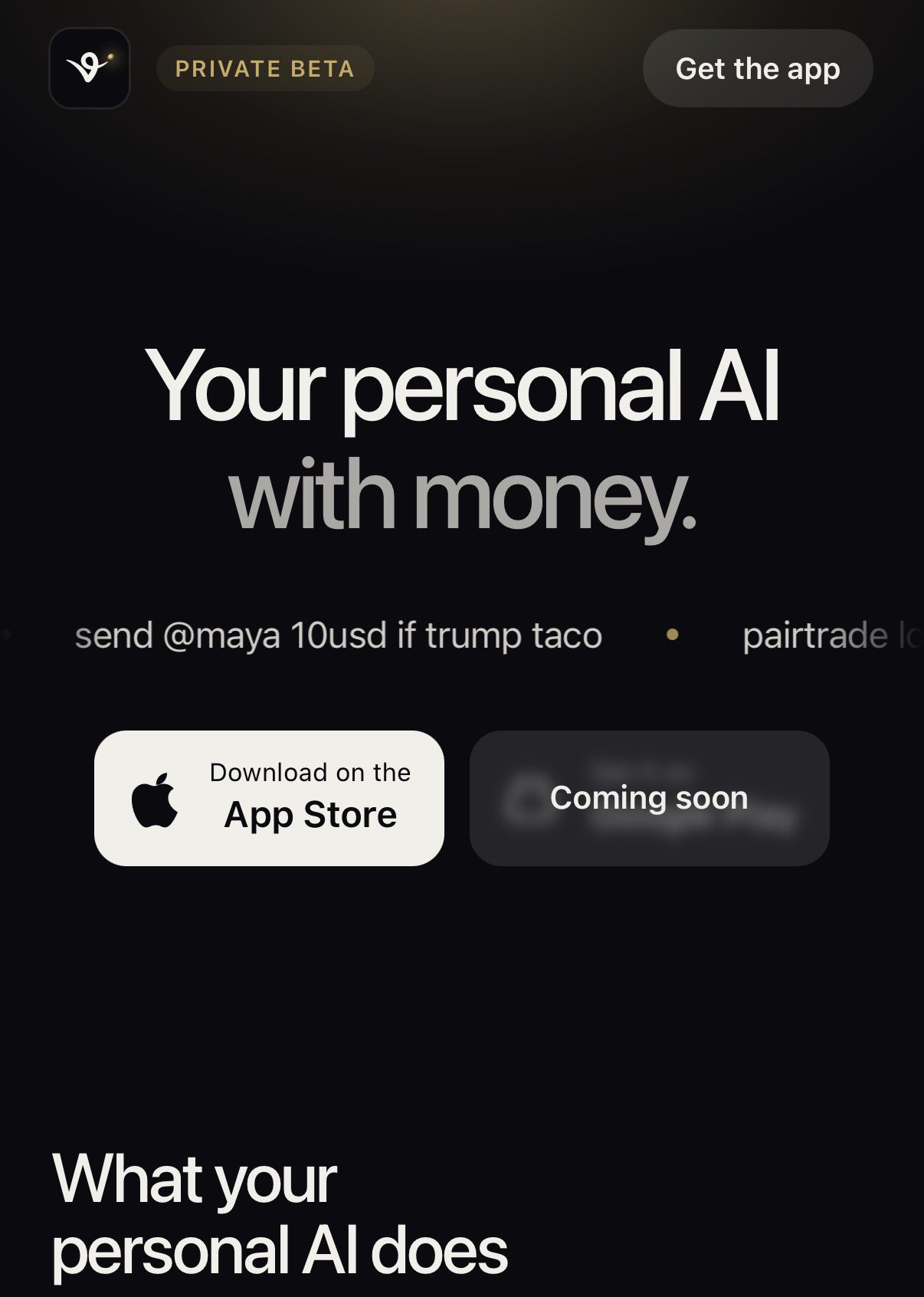
Image source: https://pbs.twimg.com/media/HUK3DqDWAAAu-du.jpg?name=orig
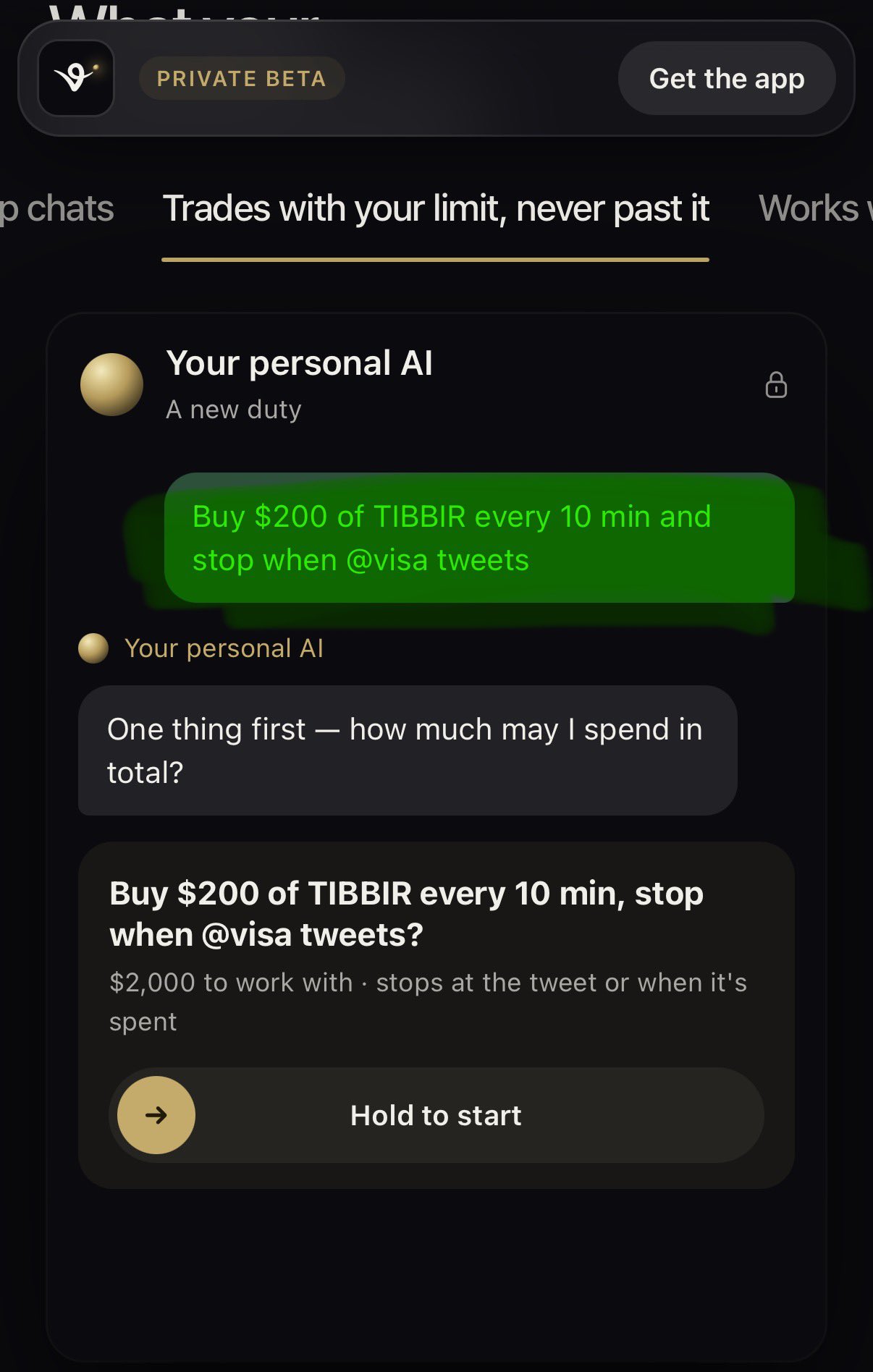
Image source: https://pbs.twimg.com/media/HUK3DqDXAAAfe59.jpg?name=orig

Image source: https://pbs.twimg.com/profile_images/1833497563254722560/e3ByeeXg_200x200.jpg
Provenance and integrity
{
  "path": "sources/community-deep-dive-2026-10-14/fx-2108448857918943276.json",
  "sha256": "12be3150d7ac51d3800bedd9d1dbe3003f96400cdd3fa05518b24ecc82282427",
  "retrieved_at": null
}
Receipt generated: 2026-10-15T09:54:54.659870+00:00. Publication and retrieval dates are separate. SHA-256 hashes detect changes; they do not independently authenticate the publisher.